

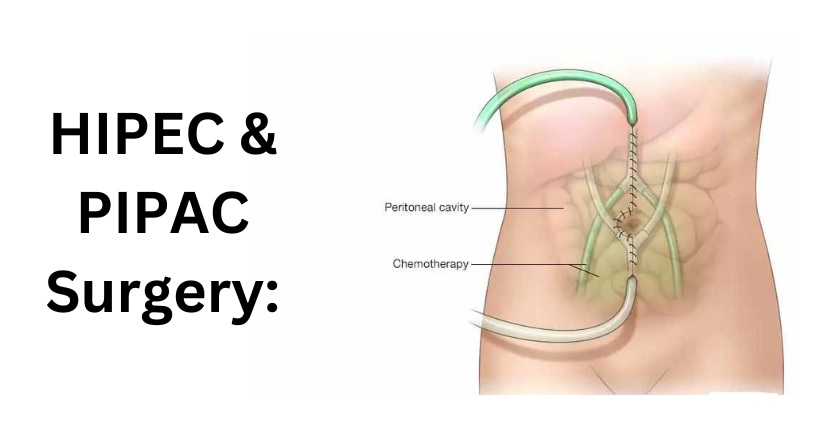
The OVHIPEC-1 trial (NEJM 2018) established cytoreductive surgery with HIPEC as a meaningful improvement over cytoreduction alone for Stage III epithelial ovarian cancer at interval debulking. Five-year follow-up data has continued to support the survival benefit. The question that has emerged since is what comes next, specifically, whether sequential intraperitoneal interventions through the patient’s care pathway can produce additional benefit beyond a single HIPEC at the time of cytoreduction.
PIPAC, pressurised intraperitoneal aerosol chemotherapy, has emerged as the most clinically tractable candidate for this role. This piece reviews the rationale, the evidence so far, and the practical considerations for incorporating bidirectional (peritoneal + systemic) chemotherapy into advanced ovarian cancer management.
The pharmacological rationale
The pharmacokinetic advantage of intraperitoneal chemotherapy over systemic delivery in peritoneal-confined disease is well-established. The peritoneal-plasma concentration gradient for most cytotoxic agents favours intraperitoneal exposure by 2–3 orders of magnitude. The clinical translation of this advantage, historically explored through normothermic intraperitoneal chemotherapy and then HIPEC, has been variable, partly because the technical delivery of homogeneous peritoneal exposure has been difficult.
PIPAC addresses this by delivering chemotherapy as an aerosol into a CO2-pressurised peritoneum. Three properties matter:
- Aerosolised distribution achieves visibly more uniform peritoneal coating than liquid lavage techniques
- Pressure-driven penetration improves drug delivery to the sub-mesothelial tissues where micrometastatic disease persists
- Lower dose requirement because the local concentration is preserved at the tissue surface, reducing systemic toxicity
The cumulative effect is intraperitoneal delivery with materially better tissue exposure than HIPEC for surface disease, with substantially lower procedural intensity (laparoscopic, 60–90 minutes, 2–3 day hospitalisation).
The case for bidirectionality
Pure local treatment for ovarian cancer has theoretical limits. Even with optimal peritoneal coverage, systemic micrometastatic disease is common in Stage III–IV cases. The case for bidirectional therapy, combining PIPAC with continued systemic intravenous chemotherapy, rests on three observations:
- Distinct disease compartments. Peritoneal-surface micrometastatic disease and systemic micrometastatic disease respond to different drug exposures. The peritoneum responds to local intracavitary therapy; the systemic compartment responds to IV therapy.
- Schedule independence. PIPAC’s 6-week interval allows continued IV chemotherapy in the intervening weeks without significant interference, provided dose scheduling is planned.
- Targetable populations. Patients with residual peritoneal disease after cytoreduction-HIPEC, patients with recurrent peritoneal-predominant disease, and patients with primary unresectable disease all represent populations where bidirectional therapy is mechanistically plausible.
The clinical experience accumulated so far at centres performing bidirectional therapy has generated outcome signals that justify continued investigation, though randomised controlled trial data specifically validating the bidirectional concept for ovarian cancer remains in development.
What the early Indian experience shows
Indian institutional series exploring bidirectional chemotherapy in advanced primary epithelial ovarian cancer have documented the practical feasibility of the approach in real-world conditions. Specific findings worth noting from this experience:
- Feasibility: PIPAC delivery after prior CRS-HIPEC is technically feasible in most patients, with adhesion-related difficulty manageable through careful laparoscopic technique
- Tolerability: cycle-to-cycle tolerability is consistent with international PIPAC series; serious adverse events are uncommon
- Response patterns: peritoneal-predominant disease shows symptomatic and biochemical response in a meaningful proportion of cases, with histological evidence of regression in repeat-biopsy specimens
- Integration with systemic therapy: the bidirectional schedule is operationally feasible in Indian tertiary settings
The full data is reported in the relevant institutional series on bidirectional chemotherapy with PIPAC and IV route in advanced primary epithelial ovarian cancer, which documents the protocol, the cohort characteristics, and the early clinical outcomes.
Patient selection, the central discipline
The most important practical consideration for any centre considering bidirectional therapy is patient selection. The procedure’s apparent simplicity (laparoscopic, short hospital stay) can mask the importance of strict selection criteria.
Proposed selection framework:
Strong indications: – Recurrent ovarian, fallopian tube, or primary peritoneal cancer with peritoneal-predominant distribution – Otherwise fit performance status (ECOG 0–2) – Adequate organ function for repeated general anaesthesia – Disease that has been responsive to platinum-based chemotherapy at some point in the disease course
Reasonable consideration: – Primary Stage III disease with extensive peritoneal involvement where complete cytoreduction is unlikely – After incomplete cytoreduction – After cytoreduction-HIPEC with residual peritoneal disease
Contraindications: – Dominant extra-abdominal disease – Severe peritoneal adhesions precluding safe access – Performance status that would not tolerate repeat general anaesthesia – Limited life expectancy that makes the 18-week PIPAC course inappropriate
The multidisciplinary tumour board is the appropriate decision-making forum.
Technical considerations for the operating team
For centres beginning to implement bidirectional therapy, a few technical considerations matter:
Drug selection. The most commonly used PIPAC agents for ovarian cancer are doxorubicin + cisplatin (DOX-CIS) at low aerosol doses. Newer agents (oxaliplatin alone, paclitaxel-loaded nanoparticles) are under investigation but not yet standard.
Aerosol delivery system. The nozzle and pressure parameters affect distribution. The CapnoPen platform is the most widely-validated; alternative systems are emerging.
Adhesion management. After prior cytoreduction, abdominal adhesions are common. Initial laparoscopic access requires careful technique, particularly avoiding bowel injury. Some patients require open access for the first PIPAC cycle followed by laparoscopic access for subsequent cycles.
Safety for OT staff. Aerosolised chemotherapy requires strict containment protocols, pressurised abdomen, sealed system, dedicated air handling, and personal protective equipment. Setup and training of OT staff is non-trivial.
Integration with systemic chemotherapy schedule. Dosing intervals matter. The typical schedule is PIPAC every 6 weeks with IV chemotherapy in the intervening weeks, often at adjusted dosing.
The trial landscape
Several international trials are addressing the bidirectional concept specifically:
- The PIPAC-OPC1 and OPC2 trials provided early single-arm data on PIPAC for ovarian cancer
- The PARTIPAC study has explored PIPAC + IV combination
- The PRO-PIPAC registry is collecting larger-scale outcomes data
- A randomised Phase III trial specifically comparing PIPAC + IV chemotherapy versus IV chemotherapy alone in selected recurrent ovarian cancer is under design at several international consortia
Until randomised data is available, PIPAC’s role remains evidence-informed rather than evidence-mandated. Centres performing the procedure should be doing so within institutional protocols and ideally as part of registry data collection.
What this means for practice
For sub-speciality gynaec oncology practice in India, three implications follow:
- PIPAC infrastructure is worth building. The procedure addresses a real gap in management of advanced and recurrent peritoneal-confined ovarian cancer. The investment in equipment, training, and OT safety protocols is non-trivial but feasible at tertiary centres.
- Bidirectional therapy is more than the sum of its parts. The conceptual shift from “either local or systemic” to “both local and systemic, coordinated” requires planning across surgical, medical oncology, and nursing teams.
- Patient selection is the discipline that matters most. The procedure works for the right patients and produces no benefit for the wrong ones. Multidisciplinary tumour board review is the appropriate selection mechanism.
The bottom line
PIPAC after CRS-HIPEC, and bidirectional therapy more broadly, represents one of the more interesting developments in advanced ovarian cancer management since HIPEC’s adoption. The evidence base is building, the procedure is feasible at tertiary Indian centres, and patient selection remains the key discipline.
For Indian gynaec oncology practice, the practical case for incorporating PIPAC into the standard armamentarium for selected patients is increasingly strong. The case for waiting until randomised Phase III data is available before offering the procedure to any patient is increasingly weak. The middle path, protocol-driven implementation with careful patient selection and registry data collection, is the right path forward.
About the author
This piece was authored by Dr. Nishtha Tripathi Patel (MBBS, DGO, DNB, Fellowship in Gynaecological Oncology, ESGO-certified), an ESGO-certified gynaecological oncosurgeon in Ahmedabad with published academic work on bidirectional chemotherapy with PIPAC for advanced ovarian cancer. Reach the practice at +91 76988 00333.